"The purpose of this website is to examine the world's religions
from a Logical Empiricist perspective."
DEDICATION
This work is for the peoples whose histories were filed under other men’s words: Goyim.
Pagans. Heathens. Infidels. Kaffirs. The unsaved.
Their lands were seized. Their nations were dismantled. Their continents were claimed in the name of gods they never worshipped. Their men were enslaved and killed. Their women were violated. Their children were taken from their families and forced to serve the very empires that destroyed them.
They were told their gods were false, their books were erroneous, and their ancestors were damned. Yet they kept what mattered. The mathematics of Taxila. The medicine of the temple schools. The songs their grandmothers sang before the missionaries came. Through fire, through occupation, through centuries of contempt — they refused to let it die.
To them I offer this work: in recognition of their suffering, in witness of their endurance, and in gratitude for everything they carried through.
May their stories be told. May their names be spoken. May what they saved outlast what was done to them.
— Panini
THE MANIFESTO
REASON IN REVOLT: NO SACRED EXEMPTIONS
Reason in Revolt exists to seize the human mind back from every institution that has ever claimed to own it, and return it to the only rightful owner: the individual who thinks with it.
Its question to every prophet, scripture, priesthood, ideology, and inherited authority is not polite. It is a demand: What survives of your claim once obedience is withdrawn and evidence is placed on the table?
Most claims do not survive that room. This site exists to keep the room open.
Judaism, Christianity, and Islam are examined here not as private faiths but as what they have repeatedly proven themselves to be in practice: systems of revealed authority that generate political movements seeking supremacy over minds, laws, territories, and civilizations.
- Beyond Deterrence
- The Rigged Game
- Before You Convert
- When Human Frailty Becomes a Religious Alibi
- Put Their Writings Beside Mine.
- The Exceptional Faith
- The Counter-Jihad of the Free.
- The Sheep Must Become the Honey Badger.
- The United Front of the Victims of Jihad
- The Blind Ophthalmologist: Abrahamic Monotheism’s Failed Diagnosis
- Christianity and Islam Expel the Unbeliever; Hinduism Does Not
- Monotheism and Its Discontents
- The Brotherhood That Ends at the Border
- What If Every Hindu in India Converts to Islam for Lasting Peace?
- What If Every Muslim in South Asia Converts to Hinduism for Lasting Peace?
- The Buddhist Jesus
- The Open Mind and the Closed Book
- The Invitation and the Ultimatum
Author's Note
I am no enemy of Jews, Christians, or Muslims. On the contrary, I stand with the overwhelming majority of ordinary believers — people who did not write the doctrines they inherited and cannot verify the promises made in their name. My indictment is reserved for the clerical elite: the leadership and institutions that claim authority through revelation, police the boundaries of membership, promise salvation beyond all verification, and have too often marched ordinary people toward division, sacrifice, and slaughter.
Panini
Author.
PANINI
ISLAM AND THE CLASH OF CIVILIZATIONS
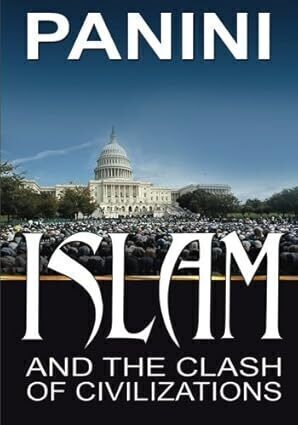

ISLAM and the Counter-Jihad Essays
Islam as an Arab Imperialist Movement
Islam is presented to the world as a universal religion, open to all races and nations on equal terms. The historical record complicates this self-image. Islam was born in seventh-century Arabia as an Arab political and religious project, and its political sovereignty expanded for the first several centuries of its existence overwhelmingly through military conquest rather than persuasion. This is distinct from the separate and slower process by which individual populations, particularly in Southeast Asia and parts of Africa, converted to Islam through trade, migration, and gradual social incentive.
Muhammad Ali Jinnah: The Greatest Hypocrite South Asia Ever Produced
Muhammad Ali Jinnah built a wall and called it eternal. Hindus and Muslims, he told history, were not two religious communities sharing one civilization but two nations who could no longer share one roof. On that single proposition, British India was cut in half. Millions were driven from ancestral homes, women were abducted and violated on both sides of the new border, trains arrived full of corpses, and a subcontinent that had absorbed a thousand years of migration, conquest, and intermarriage was told that its Hindus and Muslims had never truly been one people at all. Pakistan rose out of that ocean of blood as the monument to Jinnah's Two-Nation Theory.[1]
Brown Before, Brown After
Part One: The Claim Under Audit
Every conversion is a transaction, and every transaction implies a claim. The claim made to the Indian convert — whether the salesman wore the robes of the Sufi or the cassock of the missionary — was the same claim in two languages: leave your ancestors and you will become our equal. The ummah knows no race. In Christ there is neither Jew nor Greek. Brotherhood, universal and immediate, in exchange for everything you were.
The Dinner at the Palace of the Open Table
Disagreement and Damnation, and the Three Guests Who Walked Into the Sunset Unanswered
I built a palace in imagination because no palace on earth is large enough for the argument I intended to host.
I sent invitations across three thousand years. They went to India and Greece, China and Africa, Alexandria and Athens, Benares and Nalanda, the forests of Europe, the deserts of Arabia, the old temples, the burned libraries, the erased villages, and the graves of those whose only crime was refusing to let another man close the case for them.
The Long Persecution of the Unbeliever
Christianity, Islam, Empire, and the Destruction of Non-Abrahamic Worlds
Here is the claim, and it will not be softened.
Over the last two thousand years, Christian and Islamic empires and elites killed, enslaved, displaced, converted, occupied, and erased more human beings than the Nazis, the Communists, the Maoists, Pol Pot, and Chinggis Khan combined. They did it longer. They did it across more continents. And they did it not only by killing bodies but by destroying whole worlds. They marched into lands that were never Christian and never Islamic, and when the killing was done they called the survivors heathens, pagans, idol-worshippers, infidels, kaffirs, barbarians, Gentiles, goyim, and heretics. This is the long persecution of the unbeliever, and this essay is its indictment. It is not an apology. It is a charge sheet.
.
Abrahamic Religions and the Selective Memory of Suffering
Every civilization that has ever burned a library has called it purification. Every army that has ever leveled a temple has called it liberation. Every inquisitor who has ever lit a fire beneath a human being has called it salvation. The Abrahamic religions did not invent cruelty. Cruelty is the common inheritance of our species. What they invented was more dangerous than cruelty. They invented a theology that converts cruelty into cosmic duty. They built an architecture of sacred grief. Judaism remembers Babylon and the Shoah. Christianity remembers the Roman arena. Islam remembers rejection at Mecca. And each has used that architecture to demand permanent moral immunity while conducting, across fifteen centuries and five continents, the most sustained campaign of religious persecution in the history of the species.
The United Front of the Victims of Jihad
There must be a United Front of the Victims of Jihad. Not a front of blood, revenge, race, or tribe, but a front of method. Jew and Gentile, Hindu and Buddhist, Atheist and Agnostic, Norwegian and Nigerian — all belong to this front, because all have stood in the path of the same doctrine. So does the secular Muslim, the ex-Muslim, the writer, the cartoonist, the woman who removes the veil, and the child born into obedience before he has learned how to doubt. They have been divided by nation, language, class, and memory, and that division has been their weakness. What binds them is not hatred of Muslims, because hatred of a population is the first stupidity of politics. What binds them is opposition to jihad as doctrine, blasphemy as weapon, and submission as the declared purpose of the human mind.
Logical Positivism:
The Nuclear Option of the Oppressed
And Why India’s Greatest Minds Were Already Using It
Nothing is sacred because a holy book says so. Nothing is true because a prophet declared it. Nothing is moral because a priest transmitted it across a thousand years of fear. Nothing is profound because it is ancient. Nothing becomes evidence because millions obeyed it. Obedience is not evidence. Reverence is not evidence. Submission is not evidence. Fear is not evidence. Truth is what survives examination after obedience has been refused, after the guru has been stripped of his robes, after the scripture has been stripped of its trembling audience.
.
There Are No Minorities in India
Reason in Revolt Format — Version Ten — Official
Reason in Revolt Format — Version Ten — Official
India has been taught to speak a grammar that is not its own. The grammar says that a nation is a collection of communities. It says these communities sort themselves into a majority and its minorities. It says the majority is the norm and the minorities are the exceptions, to be counted, named, and compensated. This grammar was not born here. It was built in America, for America, out of the raw material of race and the machinery of special interest. It fits a country assembled from conquered land and imported peoples who had to be sorted before they could be governed. It does not fit a civilization. Pressed onto India, it does not describe the country. It disfigures it. .
Why Hinduism and India Must Be Defended
Hinduism must be defended because it is the only civilization of consequence that never bolted the door.
Its oldest hymn doubts God.
The Nasadiya Sukta of the Rig Veda asks who could possibly know how creation began. It answers that perhaps the one who oversees it from the highest heaven knows. Then it turns, and in the last breath of the hymn it says: or perhaps he does not know.