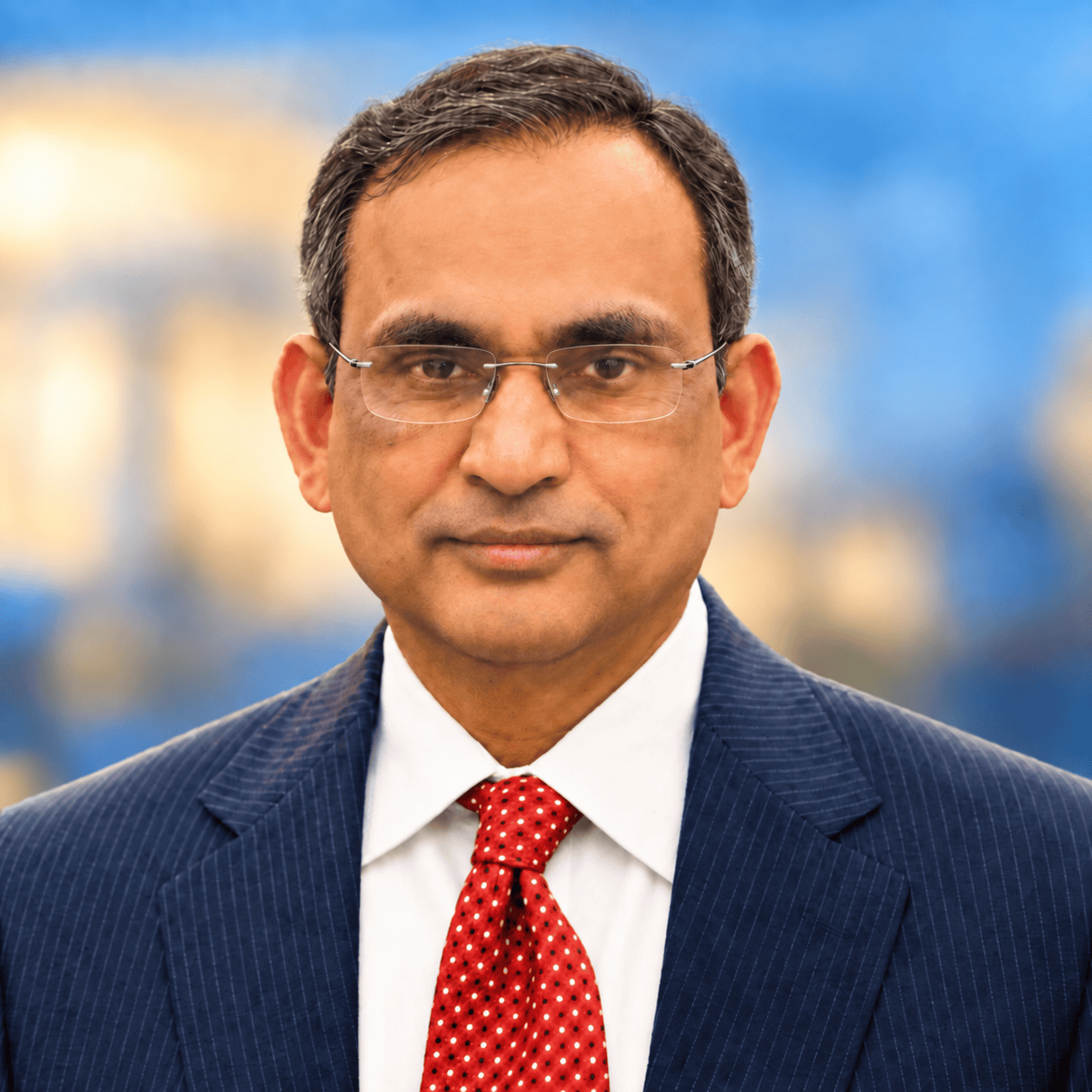
Panini has spent his life testing one rule: a claim is worth exactly what it can survive under scrutiny. He learned it before he had a word for it. The word came later—dialectics, logical empiricism, the machinery of the essays on this site. The rule came first, in a schoolyard, with a sheet of carbon paper.
He was born into a poor Telugu Brahmin family, with more siblings than shirts and fewer meals than arguments. His first ambition was modest: to be adopted by a wealthy family. That never happened, so he stuck with school, where hunger made him thin, curiosity made him reckless, and the beauty of his English teacher stole his focus. Her face was more enchanting than any grammar lesson. He loved to look at her, and she left him with no vocabulary beyond love and admiration. He failed English—not because he was slow, but because he was too busy staring at her to read the blackboard.
He had the unlucky mix of being small, poor, and endlessly curious. He was the boy who asked too many questions, who picked apart weak explanations, who couldn't let nonsense pass. Teachers disliked him. Bullies loved him. Punishments piled up whether he had earned them or not.
Then came the carbon paper. During exams he slipped a sheet under his answer page and made a duplicate. The copy went to the biggest, dullest boys in the class. They passed a test for the first time in their lives, and in return they became his bodyguards. The daily beatings stopped—his enemies took them instead. The scrawny Brahmin boy who had been everyone's punching bag now ruled the playground. He learned young that terror could be subcontracted. He also learned something he would only name years later: the arrangement worked because it was true—the answers were right—and truth, correctly leveraged, rearranges power.
The naming came in Hyderabad, in the orbit of the Communists. His older brother was in the Party, and through him Panini sat in on meetings where dialectics was taught like scripture. For the first time he heard Marx and Engels, the logic of contradiction, the vocabulary of revolution. He took to it. The trouble was that the men who preached it hated to see it used. They worshipped their leaders more than their method. They quoted Marx the way priests chant mantras, and grew nervous when asked to defend the words. Panini, armed with their own tools, turned those tools on them—shoved their contradictions in their faces, exposed their double standards. The great dialecticians were furious at the boy who beat them at their own game. It was his first lesson in the rule's real cost: a yardstick that binds everyone binds your own side too, and your own side will not thank you for it.
History carried him to Iran, to a clerk's desk at an Italian construction firm in Bandar Abbas, building the country's largest port. The Italians were gracious, the Iranians polite. The trouble came from Indian and Pakistani Muslims at the site, some from his own Hyderabad, who set out to humiliate him. His Iranian boss—a Muslim himself—noticed, and with a stroke of bureaucratic justice canceled their work permits. The offenders were deported. Panini went from victim to hero again, not with fists this time but with paperwork. Then the Revolution came. He never worked with the Ayatollahs, but he lived in a country they swallowed overnight, where revolutions erased jobs like tides erasing sandcastles. Fortune blinked his way: an American visa.
Landing in New York was like stepping onto another planet. Skyscrapers rose like steel cathedrals, people walked as if racing a clock, and the city's famous rudeness felt almost like Buddhist enlightenment—everything questioned, nothing sacred, everyone in a hurry. But epiphanies don't pay rent. He secured one of the most prestigious positions in Manhattan: lunch delivery boy in Midtown. Day after day he carried paper bags of hamburgers, fries, and Diet Cokes through the glass cathedrals. He delivered to Harry Winston, jeweler of kings; to Diane von Furstenberg, queen of the wrap dress; to Louis Nizer, the famed attorney.
Across the street, on 57th and 5th, a tower was rising. He fed the construction crews daily, sometimes the manager himself—brash, abrasive, not unkind. The man's name was Donald J. Trump. The tower became Trump Tower, and its owner became the 45th and 47th president of the United States. Panini can say, truthfully, that he once delivered lunch to a future president.
Marriage took him to the American South and the insurance industry, where he began as one more foreign clerk drowning in paperwork. Then the old instinct stirred. Using the same dialectics that had turned bullies into bodyguards and permits into justice, he restructured the company's flow of information. The result: six million dollars in direct savings, millions more in efficiency. The company gave him a bonus. His middle-management colleagues gave him resentment—and then lost their jobs, because that is what the exposed contradiction does. Efficiency affirmed, bureaucracy negated. The rule again: it pays, and it costs, and usually the cost lands on whoever was living off the thing you corrected.
Then came September 11. Panini watched it happen on television, Dan Rather narrating—the anchor he had trusted for years, the steady voice he let interpret the world for him. As the towers came down, Rather stopped narrating. The man simply ran out of words, and Panini watched his favorite anchor sit in the wreckage of his own composure, with nothing left to say. Something in him changed in that silence. Until that morning he had been a bleeding-heart liberal, even working for a powerful Democratic politician in the South—he will leave the name unspoken; everyone knows who it was. September 12 changed his epistemology, not only his politics. He had always held that a claim binds friend and enemy to the same standard. Now he watched intellectual liberalism extend its tolerance to intolerance itself and call that a virtue, and he decided the yardstick could not bend that far and remain a yardstick. The same measure for everyone—reason, evidence, method—or the measure means nothing.
That conviction cost him the easy vote. He is not eligible to run; he was not born here. Under a forced binary, on the single issue that morning had burned into him, he judged the candidates by what they were willing to say plainly about the threat—and only one said it. So the boy who once carried hamburgers into Trump Tower voted for its owner in 2016, 2020, and 2024. Not because reason handed down a verdict on the man, but because on the one axis he weighted above all others, the choice was that candidate or silence. He knows the limit of that reasoning. He casts the vote anyway, and names the limit rather than hiding it.
Now he is retired—three children, two grandchildren—and returned to his first calling. He no longer delivers hamburgers or rewrites spreadsheets. He writes in his basement, hammering out polemics on dialectical materialism and logical empiricism. It is, in his view, the best job in the world: no bosses, no managers, no slogans to memorize. Just a keyboard, a basement, and the First and Second Amendments—plus the local police, should a debate get too heated.
And what has Panini learned? The world changes its costumes but not its essence. In his schoolyard, the strong beat the weak until he flipped the script with carbon paper. In Hyderabad, the Marxists taught him dialectics, but they hated him when he applied it. In Iran, he lived in a country swallowed by Ayatollahs. In New York, he delivered hamburgers to elites and, memorably, to Trump. In the South, he saved millions and made enemies. In politics, he changed when evidence demanded it. Always the same: the powerful don’t fear enemies; they fear questions.
This is why the method costs what it costs. Dale Carnegie was no dialectician—which is precisely why he sold millions of books on winning friends, while the dialectician tends to lose both the friends and the job. Sweet talk builds careers. It has never once settled the conflicts that matter. Reason, critical thought, empirical evidence, the scientific method: these are the only tools that have ever actually closed a question. That is the whole of Panini's faith, and he is aware it is the one faith that asks to be tested rather than believed.
Better the fragile boy who became a terror with a sheet of carbon paper than one more silent casualty of the system.